
In this blog Eilidh Skinner, our Project Officer for VONNE’s Going Green Together project, reflects on Zero Waste Week this September.
This Zero Waste Week (7-11 Sept 26), we have been reflecting on the many insights and valuable experience that our participants have shared with us over the past year at Going Green Together.
When deciding to incorporate environmental sustainability into operational thinking, waste reduction is often a key focus for many voluntary, community and social enterprise (VCSE) organisations. The challenge can be knowing where to begin on this, often perceived daunting effort.
A starting point for many is reviewing recycling efforts asking questions such as:
- Do we recycle?
- Do we put rubbish in the right bins?
- Do we have enough bins?
What if change could start before we think about how we process our rubbish?
Reducing the amount of waste we produce starts with the decisions made leading up to throwing something away. For charities, this can be particularly important. By moving away from thinking about rubbish as waste, we can view what goes in the bin as precious resources. Resources are valuable, budgets are often tight and reducing unnecessary waste before it gets to the bin can mean making better use of money, materials and staff time. Adding the bonus of environmental benefits on top of these potential savings is just the cherry on top! With this focus on resources, not only are you reducing your physical waste but also the energy, water and natural resources that have been used to produce each new product.
How can we make more conscious choices before something reaches the bin?
This is where our trusty Going Green Together participants have come to help. These local teams have done the hard work, overcome many challenges and come back with insightful nuggets that could inform how you might approach waste in your organisation. Through our regular Peer Support Time and workshops, our participants have space to share practical steps and learn alongside one another. These conversations give me the opportunity to share five valuable lessons that have been tried and tested right here in the North East.
- Understand your waste
It is hard to know where to start without knowing what resources are being binned. By taking the time to physically look in your bin, you can begin to spot patterns that might not be obvious day to day. A waste audit – or put simply – identifying the contents of your bins or the weight of your waste on a regular basis (monthly to quarterly) provides valuable insight into your organisation’s waste volumes and composition. You can do this by keeping track of the number of full and half full bags of rubbish produced in one working week, from general waste to recycling and food waste. This information can uncover patterns, leading you to identify opportunities to effectively reduce waste.
It's simple and opportunities for improvement can quickly appear, like these examples:
- One organisation noted and questioned why so many oranges were ending up in the bin, resolving this by changing the type and amount of fruit ordered for staff in the office.
- Another noticed an increase in printed waste on the run up to large events, leading to a strategic rethink about how they convey their information.
- Dotty Ellis, Administrator and nominated ‘Waste Captain’ at Blue Cabin, reminded us to keep this process fun. Whilst the whole team works from home, waste is audited at every in-person event or workshop by simply weighing and counting the bin bags filled after each session. And Dotty has come up with a quick and memorable way of doing this – take a funny photo. This has caught on so well within the team that other staff and young people are now getting involved in the action.
Understanding how and why our waste is generated is an important first step. It can help us identify where resources could be saved from going in the bin and how to engage our teams in reducing waste.
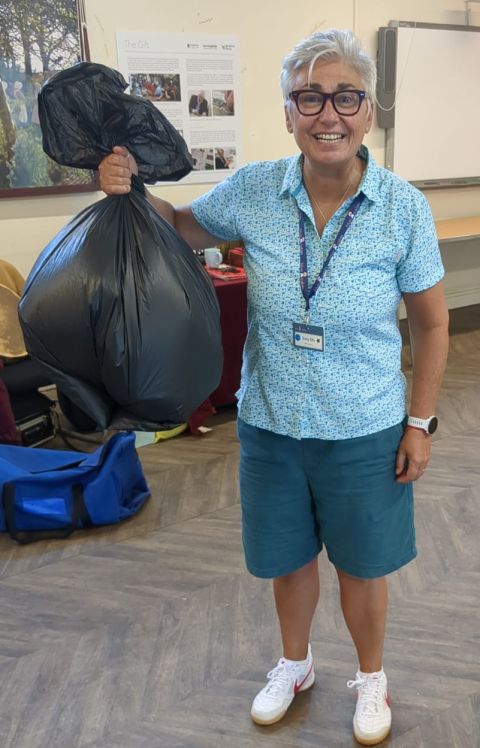
Dotty Ellis from Blue Cabin holding up the waste for their waste audit
- Encourage small shifts in your team
So, you’ve uncovered patterns and opportunities for improvement by looking in your bins. The next step in creating change is to engage the people who use them. Change doesn’t always start with big milestones. Small, achievable steps can encourage your staff and wider community to be more conscious about what they throw away.
Julia Perry from Connected Voice shared some ways to do this during a Peer Support Session. Firstly, in their office, bins are not placed at the desks, but instead a short journey is needed to throw rubbish away. Similarly, signs for segregated waste have been changed from ‘general waste’ to ‘landfill’, reminding people of the final destination of their waste should it fall into the wrong bin.
Other organisations, such as RISE North East encourage staff as a collective to find new patterns and try new routines through collective action. National awareness days, such as ‘Second Hand September’, are taken as opportunities to raise awareness around certain issues, bring the team together, support local charities and build understanding around policy change, for example, second hand procurement within the organisation.
Your team of staff and volunteers often have valuable insights into the running and day to day inefficiencies that exist. When your team is engaged and space is made for honest discussion, practical and innovative solutions can often be uncovered. Helping people become more aware of their habits and the alternatives available can lead to meaningful change.
- Ask the right questions
It is not just the office where we can be making change, what if you don’t have an office? Like with Blue Cabin, many organisations choose to focus their waste reduction efforts on their events and community engagement. In these spaces, there are countless opportunities to cut costs and reduce waste. By asking the right questions, you can not only make savings for your organisation, but also encourage caterers, venues and attendees to think differently about their own routines and habits, creating opportunities for wider change across your networks.
Simple questions can be asked in the planning stages of events such as:
- Can we reduce our food catering by fifteen percent?
- Can catering be delivered in reusable containers?
- Can we use crockery instead of disposable cups?
- How can people access information without use of paper?
What if we all started to ask these questions every time we booked a venue or caterer? Not only would food, plastic and paper waste be reduced for our organisation, but it may lead to reflection by these businesses on the impact of their offerings.
- Aim for improvement, not perfection
Starting to reduce your waste doesn’t have to mean eradicating your general waste in all areas from the beginning. Change can often be more sustainable and better supported when incremental steps are taken.
Paul Wilson, Facilities Coordinator at The Meadows, recommends starting with one focus and building from there. In their community café they focussed on food waste, starting with reducing the portion size of meals being served in the café so fewer leftovers were thrown away. This initial change has led to wider improvements across the centre, from composting of kitchen and garden waste, expanding recycling and encouraging community engagement with litter picks and electrical recycling. For the Meadows, this has been a journey over multiple years. It isn’t about getting everything right from the outset or asking ‘how can we become zero waste?’, but, instead ‘what waste can we reduce first?’.
In this process each organisation can set realistic goals to build good habits and operational structures that support this change. It’s about making more positive decisions each day, integrating change into the way we think and work. When waste reduction is broken down from a large project, those everyday decisions can start to add up to something much bigger.
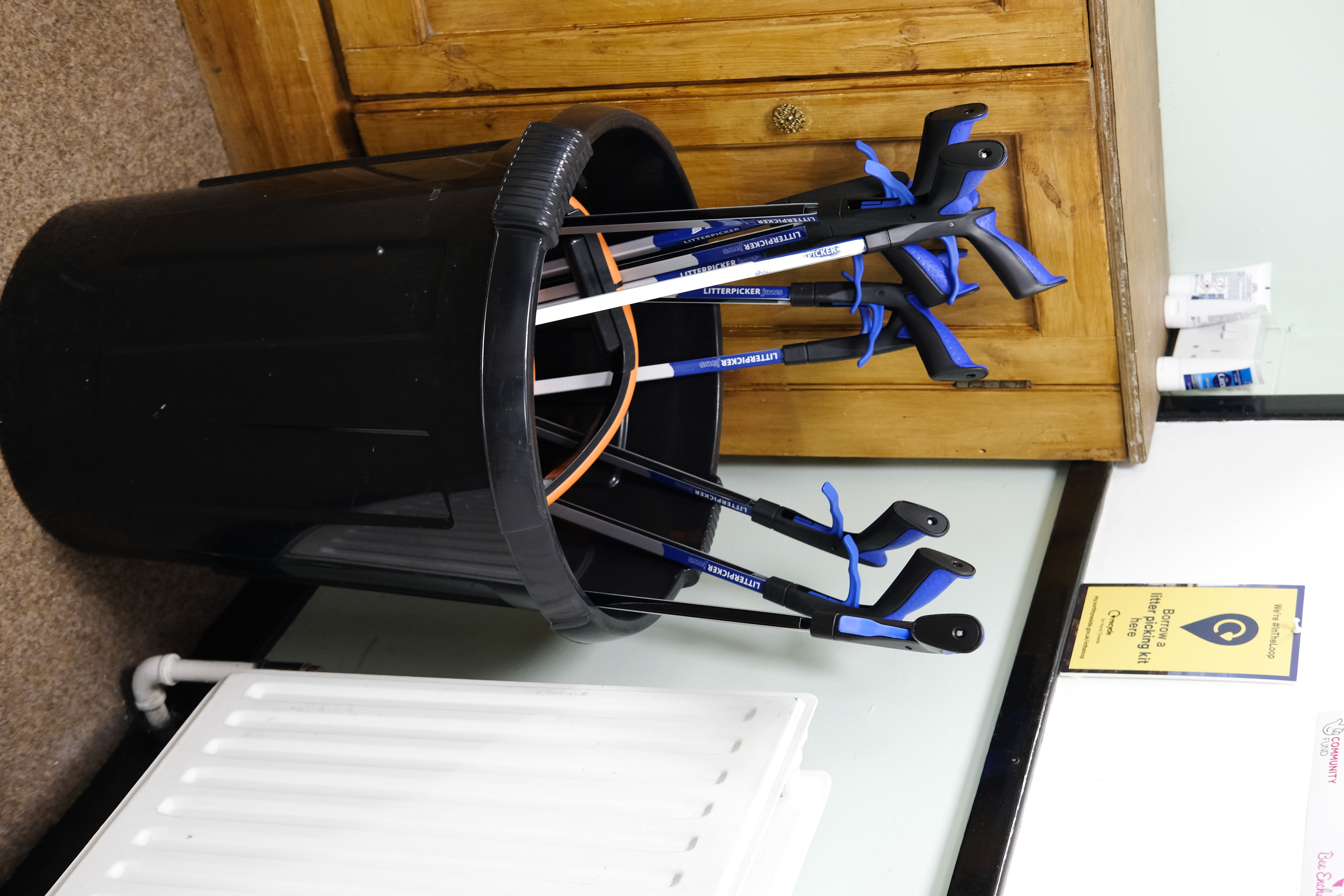
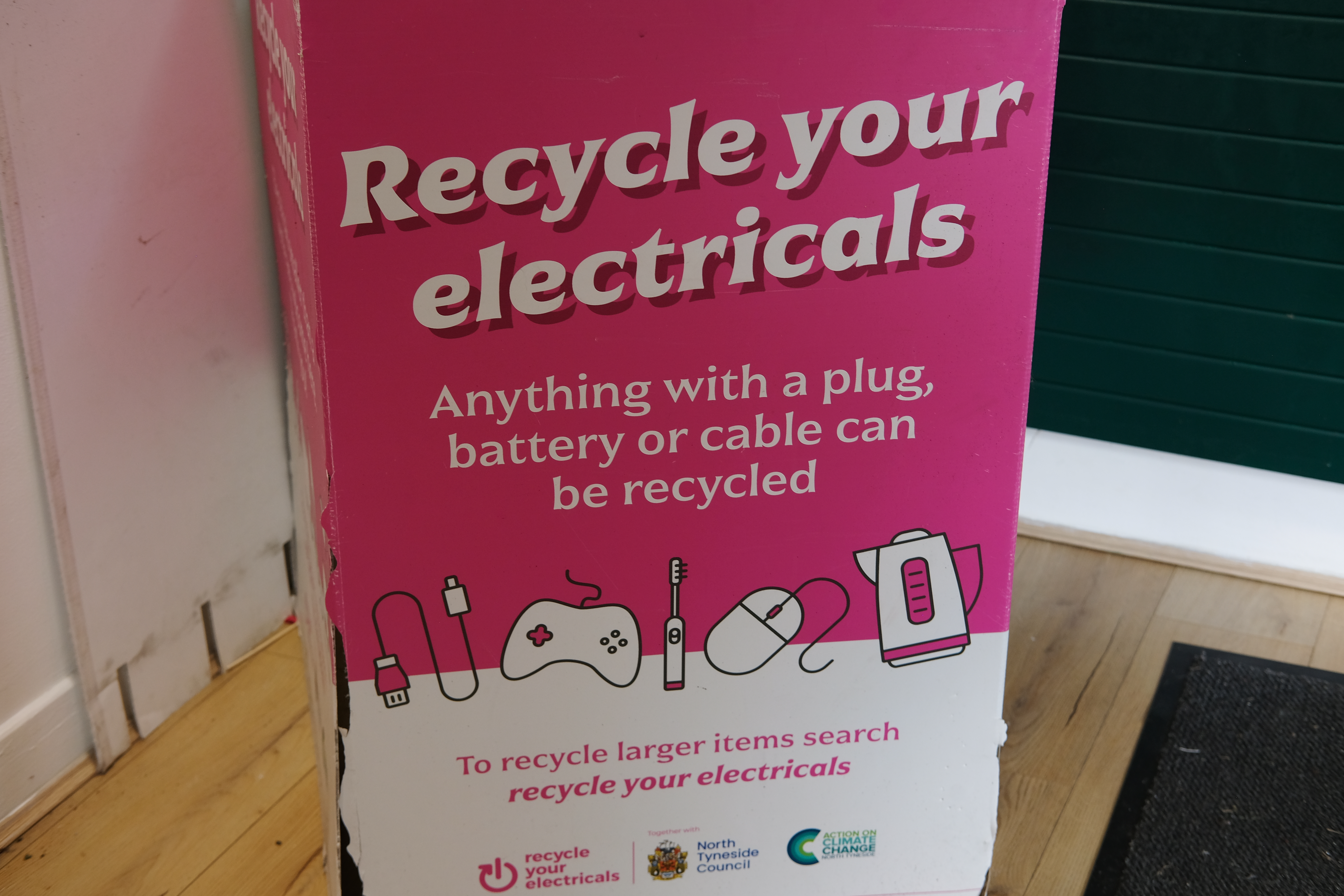
Steps taken by The Meadows to engage their community in waste reduction - 'Borrow a litter pick kit' and 'Recycle your electricals'
Waste is a prominent feature in our community and office spaces, our operations and our routines. The visibility and perception of waste to staff and our communities can send a clear signal as to how our organisations prioritises its wider environmental impacts.
So, what could your organisation’s first step be?
Ask yourself: what could I do this week to start reducing waste in my organisation?
Here are some ideas to get you started:
- Have a look in the bins. What resources could you be saving?
- Track your waste over one week.
- Choose one area of waste to focus on.
- Start a discussion at your next staff meeting.
Ask questions of your suppliers, caterers or venues.
- Connect with Going Green Together for free, practical, support and guidance.
Whatever you choose, start somewhere and let us know how you get on. By sharing the small, achievable steps we’re taking across the North East VCSE sector, we can encourage others to take action and Go Green Together.